 The Perimenopause Husband
Perimenopause: When She Says She Doesn't Feel Like Herself
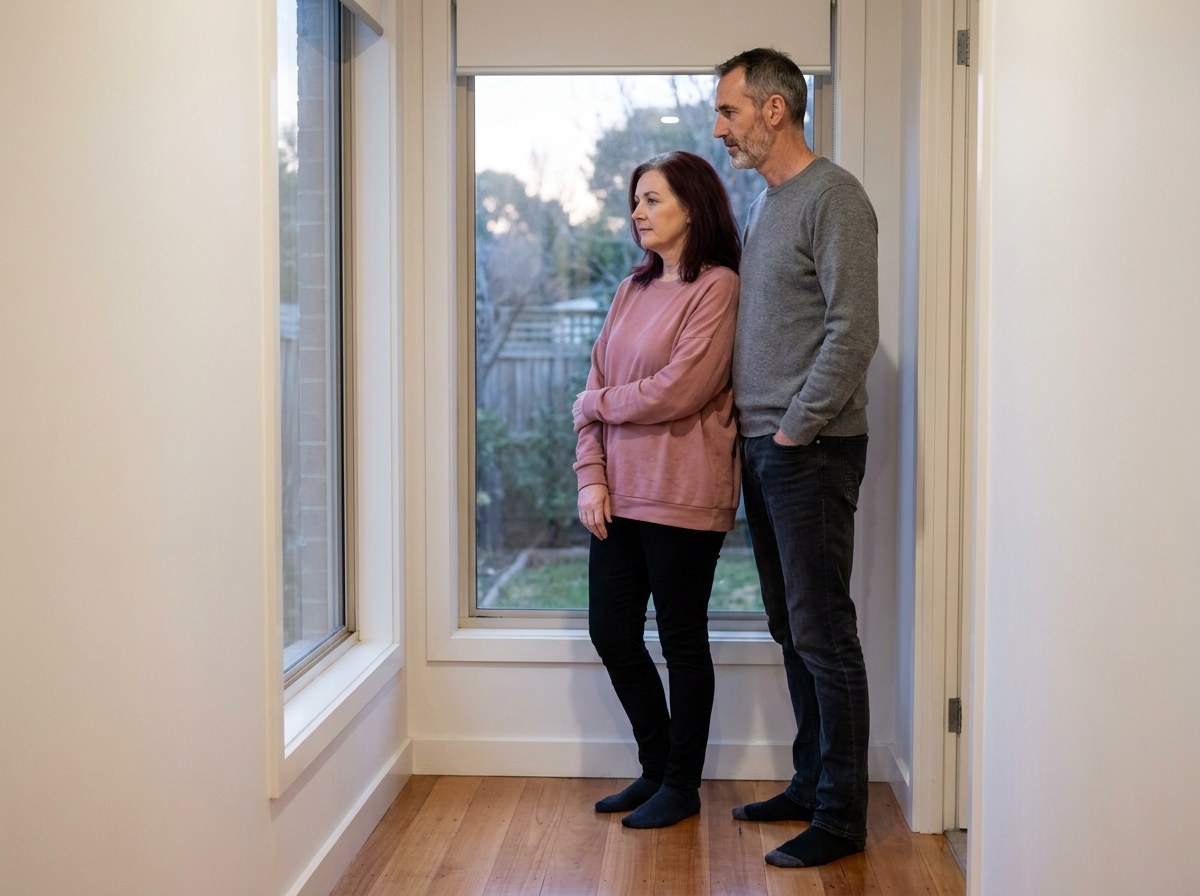
My wife said it to me one night.
I don't feel like myself any more. And I don't know why.
Nothing had happened. No fight. No bad news. Nothing on the calendar. She wasn't crying. She said it flat, like she was telling me it might rain.
It was perimenopause. I didn't know that yet.
What did I hear?
I heard, I'm not happy. And I heard, with you.
So I did what a bloke does with a sentence like that. I went looking for what I'd done. Ran the week back. What did I say. What did I forget. Whose birthday was it.
I couldn't find anything, and that made it worse. When a bloke can't find the thing he did, he decides the problem must be bigger than the thing. He decides it's the marriage.
That's a long way to jump off one sentence. I jumped it.
What did she actually say?
If I'd listened to the whole of it. I don't feel like myself.
Not I don't feel like us. Not I don't feel like you. Herself.
Think about who was saying it. The woman who ran this house. Four kids, every birthday, every appointment, every school form. Standing in her own home, telling me she didn't recognise the person doing it any more.
Some days it showed up as confidence going. Decisions she used to make without blinking, what's for dinner at six o'clock, sitting on her like a weight. A woman who had run everything, second guessing the small stuff.
Why can't she explain it?
Because nothing in particular was wrong. That was the problem.
If something's wrong, you can point at it. She couldn't point at anything. Having no idea what's happening to you, and no say in it, turns into its own worry. It sits on top of everything else and it never clocks off.
On the way through to menopause, her body is going through a hormonal, biological change, and it does not explain itself to her either. She wasn't holding the reason back from me. She didn't have one.
And she told me. Not her mum. Not her friends. Me. That's not a verdict. That's trust. I read it as a verdict.
What did I get wrong?
Here's the part I'd take back first. I made her explain it.
What do you mean? Since when? Is it something I've done?
Every one of those questions sent her back into the thing she couldn't describe, to try and describe it for me. I took the hardest sentence she'd said to me in years and turned it into a job.
I'd done it before. For days before the hallway, I kept asking questions and kept getting walls, until she told me she didn't know what was wrong with her either. Different words. Same ask. Account for this. She couldn't.
What should I say when she says she doesn't feel like herself?
Here's one of the tools. There are plenty.
Don't ask her to explain it.
Not what do you mean. Not since when. Not is it me. Not what's changed.
If you say anything at all, make it this. You don't have to explain it to me.
Then leave it there. No follow up question waiting in your back pocket. She has told you the true thing, and it was the whole of it.
She will tell you more when there is more to tell. Or she won't. You don't get to make that call for her by asking again.
The rest of what I say now, when she says it, is in the book, in the chapter When You Feel Like You've Lost Her.
Will she feel like herself again?
I can't promise you that, and neither can anyone who hasn't seen her. It is one of the things on our list that has no date on it.
What I can tell you is what I know now. She didn't change. Life did.
She is still in there. And when she says she can't find herself, the worst thing you can do is send her looking for the reason.
Start With the Weather
The Weather Report is the two-page guide to reading these days: telling a storm warning from an overcast day from a fog day, and knowing the one thing to do in each. Free, on your phone in thirty seconds.