 The Perimenopause Husband
Perimenopause Explained for Men: The Autopilot
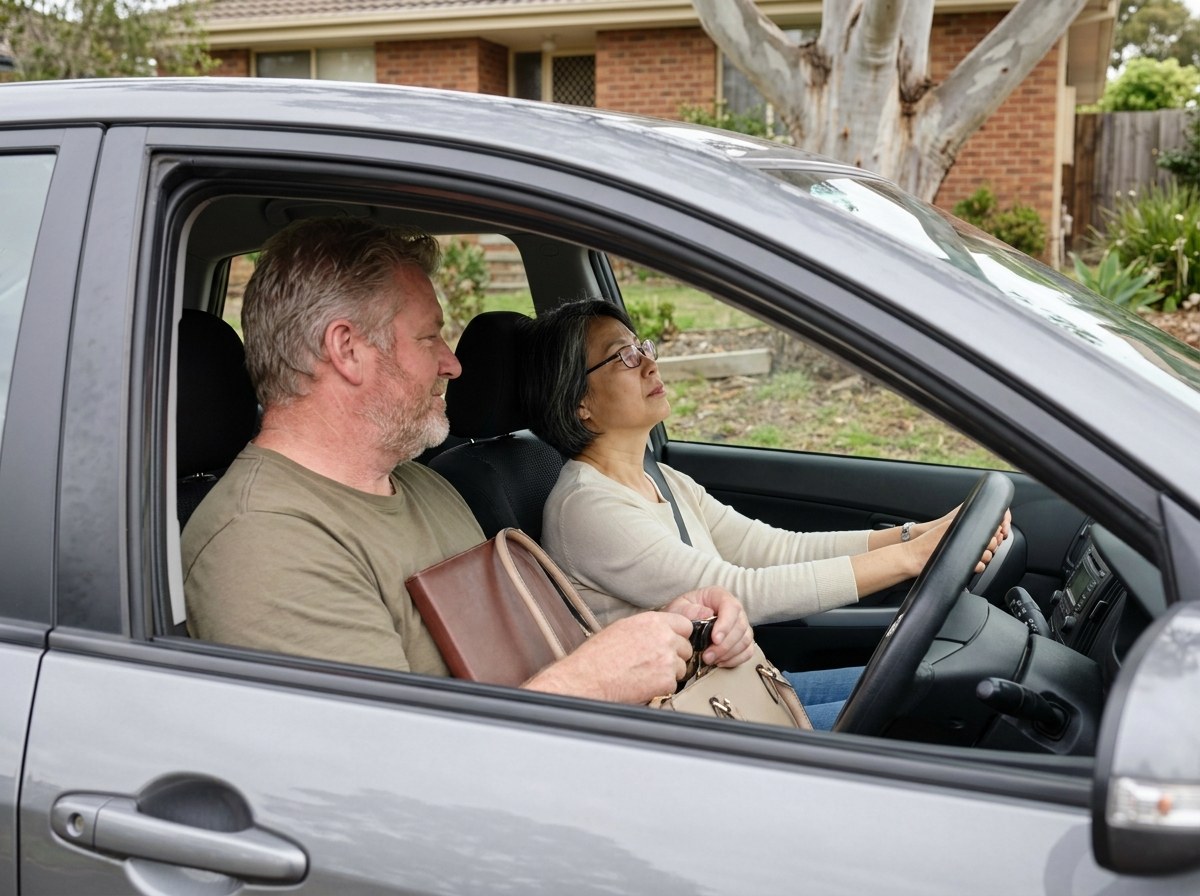
Since she was a teenager, my wife's body has run on autopilot.
Perimenopause switched it off.
It took me a couple of years to see that. Here's what I thought was going on instead, and here's the picture that finally made it make sense.
What is perimenopause, explained for men?
There are a lot of ways to understand it. Here's one.
Think of your wife's body as an aeroplane. She's the pilot. And the autopilot is her hormones.
Two of the big ones are oestrogen and progesterone. You can Google them. Her body has been making them since she was young, plenty of them, and they quietly run more than you'd think. They have a hand in her temperature, her sleep, her mood and her memory. Progesterone is the calming one, it helps her settle and sleep. Oestrogen helps keep her mood level, her memory sharp and her temperature steady. There are others too, and they're for another day.
All of it held steady by something she never had to think about. That's the autopilot.
She's been flying leg to leg, trip to trip, her whole adult life, and most of it flew itself.
What happens when the autopilot cuts out?
Perimenopause is the years before menopause, and it's that autopilot cutting in and out. Menopause is the one day at the end of it.
Some days the autopilot holds and it's smooth. Then it switches off. That's oestrogen and progesterone rising and falling, with no warning and no pattern. Over time, they drop.
It switches off when it wants to, and she has no idea when that's going to be.
So now she flies the plane by hand. Her temperature, by hand. That's the heat that comes from nowhere. Her sleep, by hand. That's the nights awake at two and three. Her mood, by hand. That's a sharper edge than usual, with nothing behind it. Her memory, by hand. That's walking into a room and forgetting why.
And she's still got a full day's work ahead of her. The kids. The house. Her job. Everything that has to get done. She's not choosing to drop any of it.
She's got both hands on the controls, and the things the autopilot used to look after are not getting looked after. That's what the symptoms are. The full list of what that looked like in our house is long, and every one of them is a job the autopilot used to do.
What did I get wrong?
I was the bloke in the back.
The family's in the back, asking why the flight's gone a little bit bumpy. And I was one of them. What's wrong with you today. I thought you had everything under control.
She thought so too.
I thought the pilot had changed. She hadn't. The plane got harder to fly, and nobody told either of us.
Why is she done by dinner?
Because she's been hand flying since six in the morning.
That's why she can't pick what to cook. The dinner question at six o'clock lands on someone who has been holding her own temperature, her own mood and her own memory together all day, by hand, while everyone else assumed the autopilot was on.
None of this got better in our house until we accepted it was real and started having the honest conversations, through the day and the evening. Everything else is built on that.
What can I actually do?
Here's one of the tools. There are plenty.
Get out of the back and sit next to her. Be her co pilot.
The co pilot takes the radio, the checklist, the fuel. Everything that doesn't need her hands.
In our house that could be the dinner. The school forms. Making sure the washing's done.
Not asked for. Taken.
On the days the autopilot's out, she's only got hands for one job, and that's flying the plane.
Getting out of the back means one more thing, too. You stop asking what's wrong with her today. The passengers ask that. The co pilot is already doing something.
If you want the noticing half of this, the basket on the stairs is where I learned it. Which jobs to take, and how to keep them taken, is a whole chapter of the book.
Can a doctor fix the autopilot?
A doctor or a specialist in this field can sometimes get that autopilot partly back. Sometimes they can't.
That's between her and them.
Your job is to sit next to her.
Is that the only way to understand it?
No. That's one way.
It might land for you, and it might not. That's fine. The picture isn't the point. The point is that the pilot didn't change. The plane got harder to fly.
Once I saw that, I stopped asking her why the flight was bumpy and started picking up the radio.
Start With the Weather
The Weather Report is the two-page guide to reading these days: telling a storm warning from an overcast day from a fog day, and knowing the one thing to do in each. Free, on your phone in thirty seconds.