 The Perimenopause Husband
Perimenopause Mood Swings: Learning to Read Her Weather
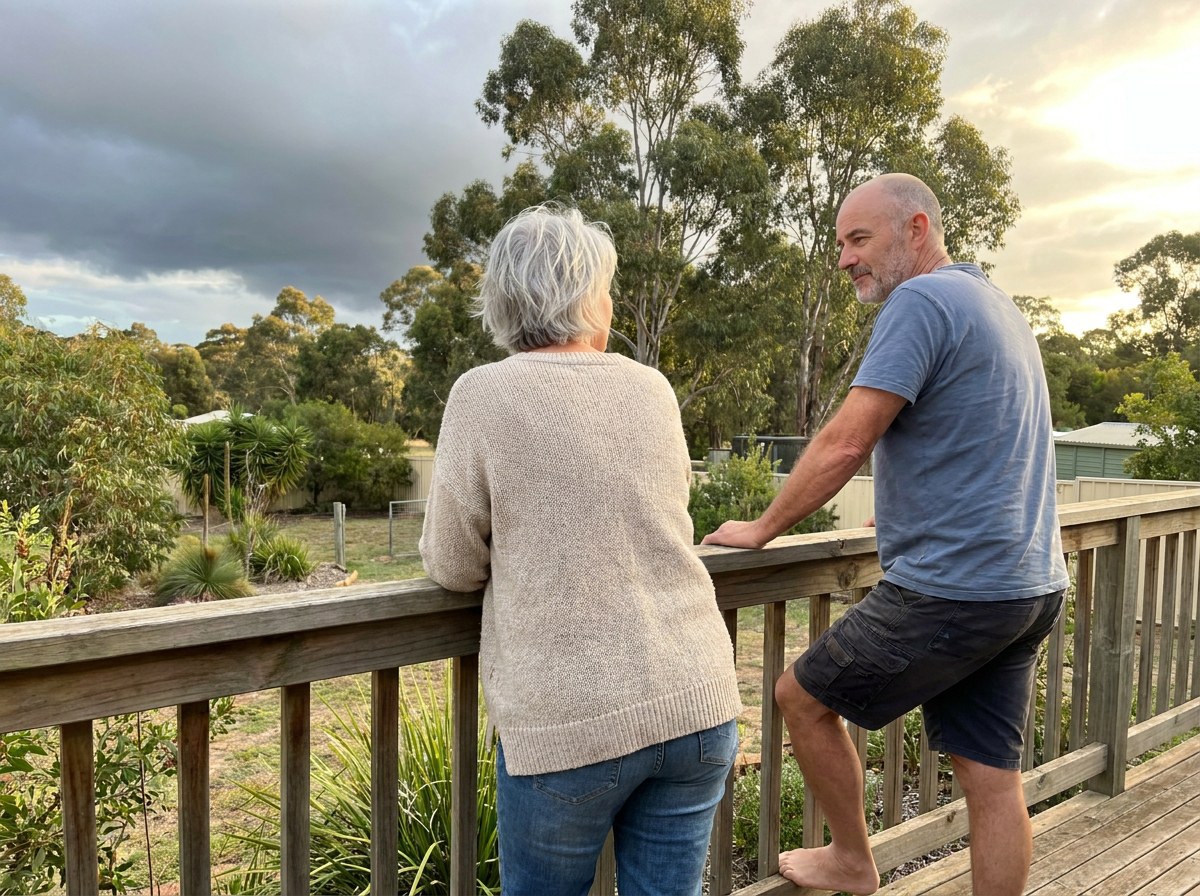
For a long time I tried to work my wife out.
Same woman, different day, completely different person.
I kept trying to diagnose her. What did I do. What changed. What's wrong.
Why is my wife always in a bad mood?
She wasn't always. It only felt like always, because the hard days were the ones I was counting.
Four seasons in one day is a real thing in our house. She could be herself in the morning and flat by lunch. Or the other way round. Some days one pattern sat over the house for a day and a half. Some days she went through the lot.
What I couldn't see was that every one of those was weather, not her.
What did mood swings look like in our house?
Not yelling. Our house was never that.
A sharper edge than usual. Not her normal tone. Then quiet. Then each of us off doing our own thing.
Something small left on the bench, and suddenly it was a big deal. The next day, the same bench, the same thing, and nothing.
Our house, might not be yours. Some houses get it louder. Some get it quieter. Every woman gets her own version.
What did I get wrong?
I kept trying to diagnose her.
When the mood turned, I'd go back through the day looking for what I did. The wrong thing I said. The moment I missed. When I couldn't find it, I'd land somewhere worse.
Each turn read like a verdict on me. Or on her. Or on us. It was none of those. The Storm Warning days in particular land on the husband first, and I took every one of them personally.
Is it the hormones?
In our house, yes. And it's simple enough to say plainly.
There are hormones that affect your wife during perimenopause. Two of the big ones are oestrogen and progesterone. You can Google them. Oestrogen helps keep her mood level. Progesterone is the calming one, it helps her settle. There are others too.
In perimenopause they stop running steady. They rise and fall, with no warning and no pattern, and over time they drop. So her mood has less holding it level.
She isn't choosing it. She can't see it coming any more than you can.
If her moods are frightening either of you, or the low ones don't lift, she sees a doctor or a specialist in this field. You go with her, if she wants you there.
How do I read her weather instead?
Mood swings is the word people type. In our house we use the weather. Five weather patterns.
Storm Warning. The days the pressure is high and close to the surface. Things that never used to bother her are suddenly a big deal. Something small left on the bench.
Overcast. The flat, tired days. Going through the motions. Not angry, just dimmed.
Fog. The days she's there, but nothing lands. She walks into a room and can't tell you why she's in it.
Clearing. The pressure has lifted a little. Better, but tender. One wrong word and it tips straight back.
Sunshine. The days she's herself. Laughing with the kids, giving me a hard time and meaning none of it.
She can go through all five in one day. Or one can hang over the house for days. Here's one day that went from Storm Warning to Sunshine, start to finish.
What's one thing I can do?
Here's one of the tools. There are plenty.
Name the day.
When her mood turns, before you say a word, put the pattern's name on it in your own head. Not "she's in a mood". Not "what's got into her". Storm Warning. Overcast. Fog. Clearing. Sunshine.
That's it. You don't announce it. You don't say it to her. It's for you.
It sounds too small to matter. It isn't. "She's in a mood" is a verdict on her. "It's an Overcast day" is the weather she's in. One of those you take personally. The other you can work with.
Once you can name the day, you stop taking it personally, and you start seeing it coming.
What to do in each of the five is in the free guide below. It starts with knowing which one you're in.
Does it get easier?
It did in ours.
I stopped trying to diagnose her and started reading the weather instead. Same woman. Different weather. She never stopped being the woman I married. She was in weather I couldn't see.
And it goes both ways. Perimenopause is a relationship thing, not just her thing. Reading her weather is part of respecting what she's living through.
Start With the Weather
The Weather Report is the two-page guide to reading these days: telling a storm warning from an overcast day from a fog day, and knowing the one thing to do in each. Free, on your phone in thirty seconds.