 The Perimenopause Husband
Perimenopause Shoulder Pain: When Her Shoulder Froze
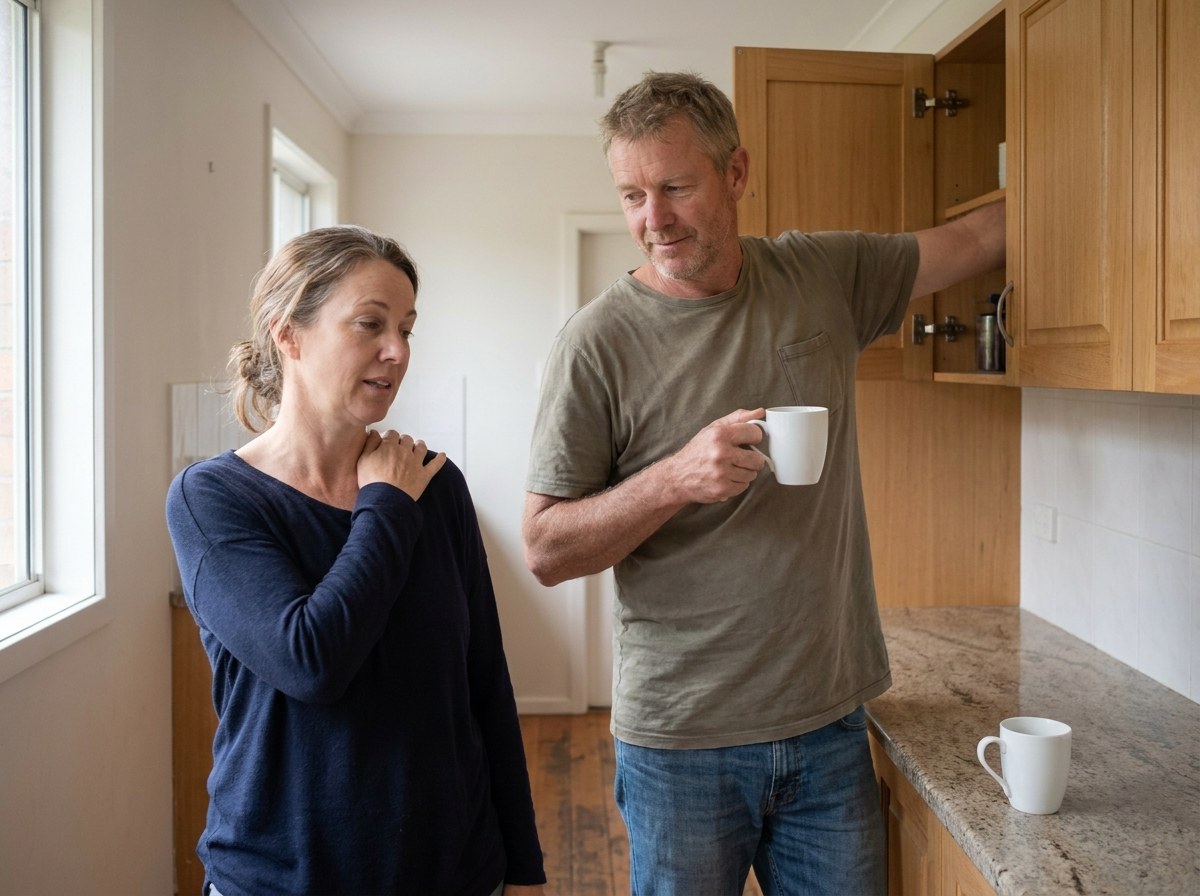
My wife's shoulder seized up like it was frozen. Nobody told me perimenopause could do that.
She told me it felt stiff. Almost frozen.
And I had the answer ready. I'd been carrying it around for years.
What was my fix?
A pillow.
I used to wake up with a sore shoulder from the way I slept. Over the years I worked out that hugging a bigger pillow at night sorted it. I even tested it. I went a stretch without the pillow, and the soreness came back.
One of our sons had the same thing. He took the tip, and he still sleeps with the pillow. No pain.
So when my wife's shoulder went, I told her, just do what I do and you'll be fine.
It wasn't that. It was much more.
Why didn't it work for her?
Because it was never the same shoulder problem.
Everyone in our house has played sport. We know what an injury feels like. We know what sleeping on it wrong feels like. This was neither.
The way she described it, the shoulder just wasn't moving the way she wanted it to move. An annoying freeze. Limited in what she could do with it. And always that soreness underneath, sitting there whether she'd done anything or not.
My pillow was an answer to my shoulder. Hers was asking a different question.
Can perimenopause cause shoulder pain?
In our house it was on the list.
When I wrote down everything that has turned up for her over the last few years, a severe shoulder, like it was frozen, was on it. Later it was her hip, badly enough to put us in emergency. It moves around. One pain, then a different one months later, each looking like its own bad luck.
On the way through to menopause, her body is going through a hormonal, biological change, and it does not ask first. In our house, the shoulder was one of the places it showed up.
A shoulder like that can have more than one cause, though. If it is locking up, or it will not settle, it is worth her seeing a doctor or a specialist in this field. That is their call, not mine and not yours.
What did I get wrong?
I'll put my hand up. I went straight to the fix.
That's the instinct. She has a problem, I have a thing that worked, so I hand it over. It feels like help. It feels like the most useful thing a bloke can do.
What it actually told her was, this is simple, and you haven't tried the simple thing yet.
I had done the same thing before, with a fitness app. It worked for me, so why couldn't it work for her. Different body. Same mistake.
And underneath all the fixing was a sentence I did not want to say. I can't fix it.
What should I do when her shoulder won't let up?
Here's one of the tools. There are plenty.
Ask her what it feels like before you hand her what worked for you.
Then take her answer as the whole answer. Not the start of a debate. If she tells you it isn't your kind of sore, it isn't.
Ask it once, and ask it properly. You are not checking up on her. You are finding out what you are actually dealing with.
Her description told me more than everything I thought I knew about shoulders. The freeze. The limit. The soreness that never quite left. None of that was in my pillow.
What if I can't fix it?
You probably can't. I couldn't.
It took me a while to say that without it feeling like I had let her down. I can't fix it. That is just true.
It is not the end of being useful, though. A shoulder that won't do what she asks of it changes what the two of you can do together, and what changes in a house when her body changes the rules is in the book, in the Moving Together chapter.
She did not need a coach for her shoulder. She needed me on her side of it.
Start With the Weather
The Weather Report is the two-page guide to reading these days: telling a storm warning from an overcast day from a fog day, and knowing the one thing to do in each. Free, on your phone in thirty seconds.