 The Perimenopause Husband
What My Husband Needs to Know About Perimenopause
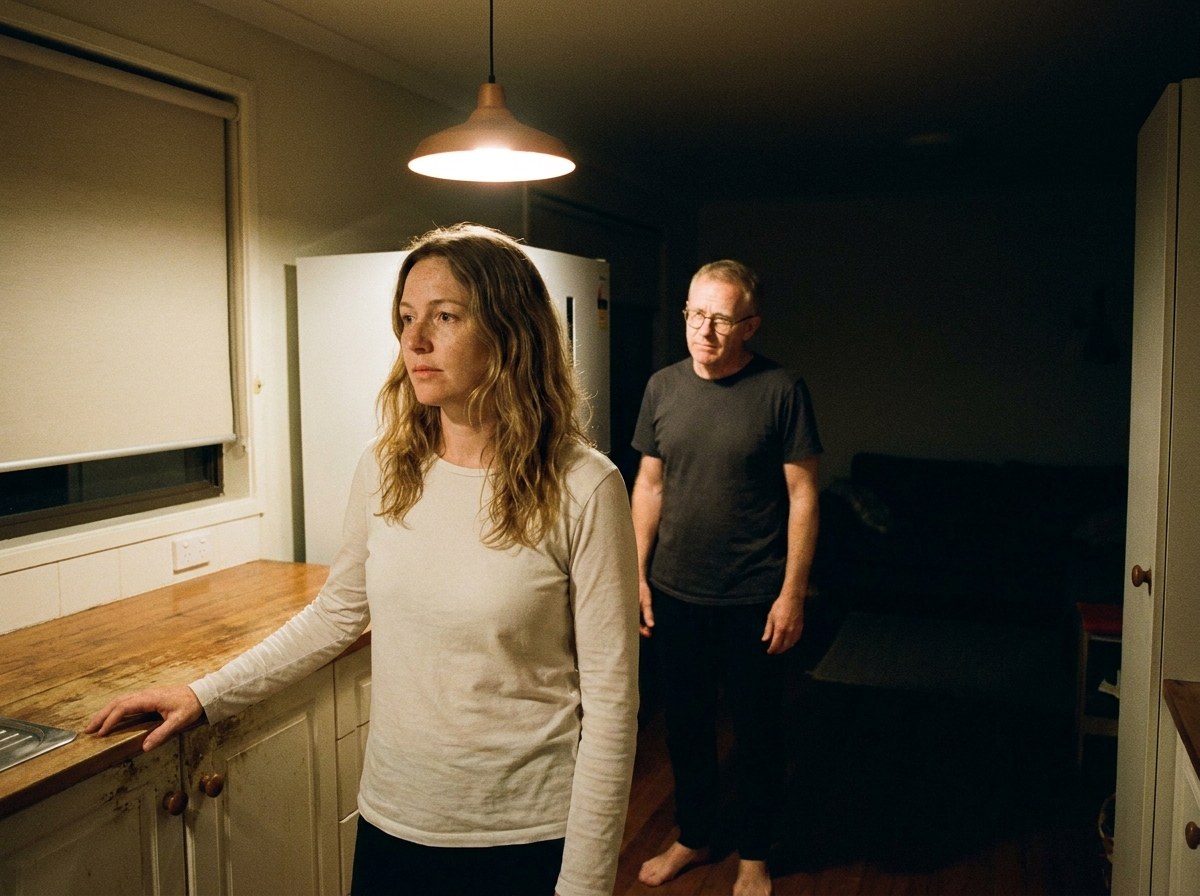
Everyone had gone to bed. We were in our bedroom, she had her back to me, and she said it like it was just a fact about the world.
Everyone kept saying how happy and positive I was back then. So I suppose I'm just a grumpy old woman now.
That was my wife. Twenty six years married, thirty one years together, four kids. And that was the version of herself she had settled on.
I knew it was not true. I could not tell her why she felt that way, and neither could she. That is the part that has stayed with me, and it is the reason this page exists.
If you are here because you want to hand him something, take this. It is written by a bloke who got it wrong for years, for the bloke in your house who does not know yet.
What does my husband actually need to know about perimenopause?
Three things. Only one of them is about her body.
He does not need to know what a hormone does. He does not need the word for anything. I still could not give you a clinical explanation of any of it, and I have written a book about living with it.
Here is the whole of what he needs, in the order it mattered in our house.
One: it is real, and it arrives without warning
This is the only one that is about her body, and it is the shortest.
She is tired in a way sleep does not fix. She walks into a room and cannot remember what she came in for. She is hot when everyone else in the house is cold. Her heart races for no reason she can name. She is sad on a Tuesday with nothing behind it.
None of that is on a schedule. She does not know when the next one is coming any more than he does.
The full picture of what a husband actually sees, in plain words rather than medical ones, is on the symptoms page. He does not have to memorise it. He has to believe it.
I noticed most of it for years. She was hot when the rest of us were cold. She was awake at two in the morning. She had less patience than she used to for things that never used to bother her. I saw all of it and I did not once put it together.
Noticing and paying attention are not the same thing.
Two: she cannot explain it, and asking her to costs her something
This was the one I got most wrong, and it took me the longest.
When something is wrong, a bloke looks for the cause. That is the whole of our training. So when I could see something was wrong and she could not tell me what it was, I pushed. I asked more questions. I went looking for the reason I assumed she was leaving out.
She was not leaving anything out. She did not have it. She was already frightened by what was happening inside her own body and her own head, and every question I asked told her she should be able to account for it.
Every "what's wrong" that gets no answer is not a closed door. It is the honest answer.
Three: he has not done anything, and neither has she
The reason he keeps taking it personally is that he has run out of other explanations.
He goes back through the day looking for the thing he said. When he cannot find it, he lands somewhere worse and decides this is just how the marriage goes now. That is where the quiet ones end up, and none of them say it out loud either.
Nobody prepares a man for this. Not his dad, not his mates, not anywhere. By the time either of you hears the word perimenopause, or menopause, the storm has already been in the house for years.
He is not refusing to understand. He is uninformed, and he is quietly scared. Both of those are fixable, and the second one is why he goes quiet.
What should I actually say to him?
One thing. Not the list.
Pick the one symptom that frightens you most, and tell him that one, on an ordinary day, when nothing is happening.
Not all nineteen. Not mid storm, when it will land on him as blame and he will defend himself. One thing, once, on a Tuesday afternoon, in your own words, without editing it down to something easier for him to hear.
Here is why one works and the list does not. A list makes a bloke freeze, because there is nothing in it he can do. One thing gives him something to hold. He will ask you about it. What it feels like. When it started. What makes it worse. That is how I learned everything I know, one symptom at a time, in small conversations, never one big one.
And he will remember the one you picked, because you picked it.
Will he ever get it?
I can't speak for your husband. I can only tell you about one, and it is me.
I got it. Eventually. And I was about as far from getting it as a husband can be.
Not from an article. Not from a sit down. From paying attention after years of only noticing, and from my wife telling me things in small pieces until the picture came together.
She was never a grumpy old woman. She was a woman in weather nobody had named for her yet, being asked to keep functioning as though the weather were not there.
She didn't change. Life did. That was true in our house and it is almost certainly true in yours.
Send Him the Weather
The Weather Report is the two-page guide to the five weather states, what each one looks like from his side and the one thing to do in it. Free. Send it to him, or print it for the fridge.