 The Perimenopause Husband
A Perimenopause Book for Husbands: What It Should Actually Tell You
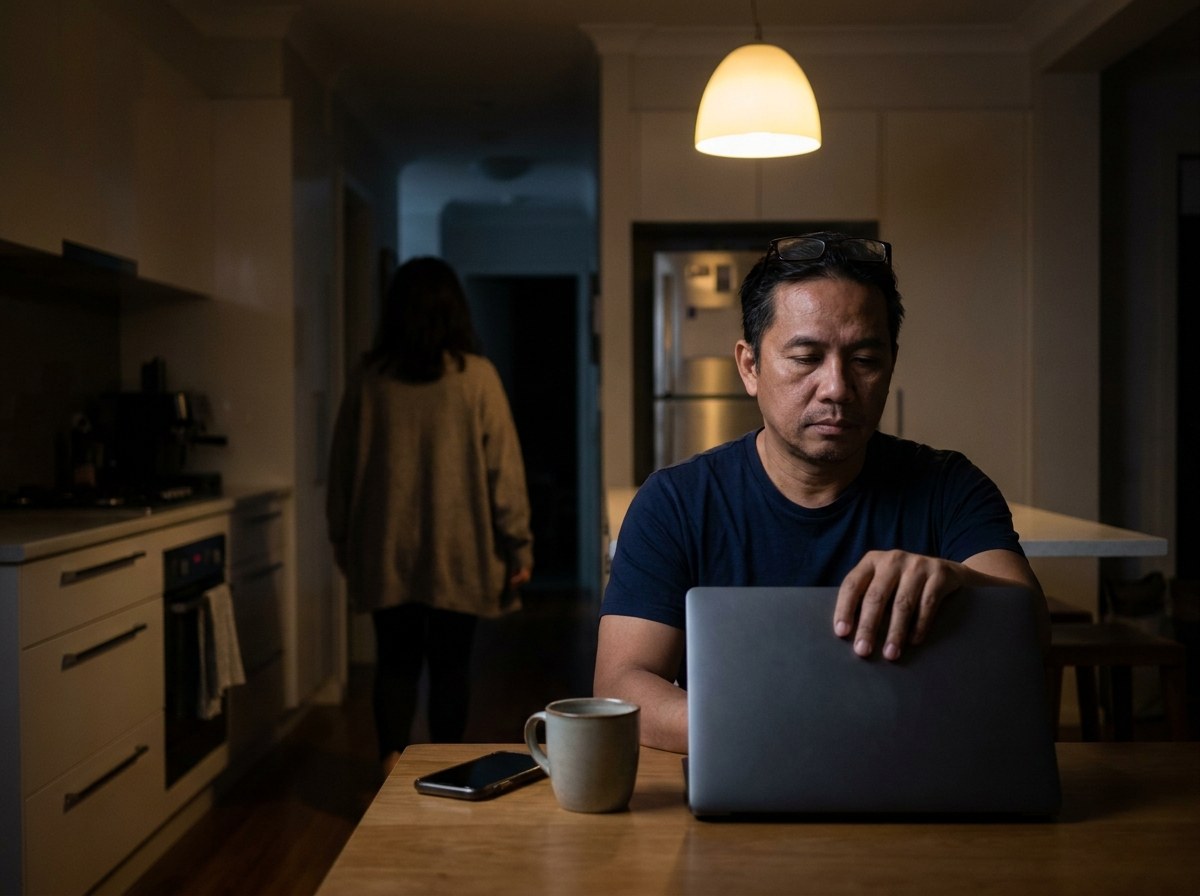
For a couple of years, I called it getting older.
Hers, I mean. The snap that came out of nowhere. The tears she could not explain. The evenings I asked what was wrong and got nothing. I put all of it in one box and wrote getting older on the lid, because nobody had ever given me a better word.
Then my wife said the word to me. Perimenopause.
Once I had the word, I went looking.
Is there a perimenopause book written for husbands?
Not many. That was the honest answer when I went looking, and it is a big part of why I ended up writing one.
There was plenty out there. Blokes talking about the symptoms. Blokes talking about hormones. Some of it perfectly good, and not one bit of it connected with me.
It explained what was happening in her body. It did not explain why the goodnight kiss had stopped. Or the sadness that turned up with no reason attached. Or the Fog days, when she was sitting right there and nothing I said landed.
I did not want the hormonal side of it. I already knew it was biological by then, and I already knew there were symptoms. Knowing that did not help me one bit to work out how to get through this, or how to actually be of use to my best friend, who was living it inside herself while I stood in the kitchen reading about her.
So if you have typed this in late at night and come up short, you are not searching wrong. The shelf really is thin on our side.
What did I do when I could not find one?
I decided early on that I was going to have to work it out myself. And it started with paying attention. Really paying attention.
Her body language. Whether she made eye contact. How long her sentences were, because on the hard days they got shorter. Her tone, which told me more than the words did. And who got the best version of her that day, and why it so often was not me. That last one turned into its own article, because it took me a long time to stop taking it personally.
None of that is in a book about hormones. It is not medical. It is just what this looks like from across your own kitchen once you stop guessing and start watching.
That is what I ended up writing down.
What should a book for husbands actually tell you?
Here is my list, and it is short. Hold any book up against it, mine included.
It should tell you it is real, before it tells you anything else. Not her being difficult. Not a phase she should snap out of. Real. It took me a couple of years to get there, and nothing worked until I did.
It should talk about what she is doing, not what her hormones are doing. You need to recognise your own house in it.
It should treat this as a relationship, not a condition she has. This is the one I would put at the top now. Perimenopause is not something happening to her while you stand next to it waiting for it to finish. It is happening to the two of you, and the way you treat each other while it happens is what decides how you come out the other side. Respect, both ways, is what gets a couple through this. Without it, no tool in any book is going to do much.
It should own its mistakes. A book where the husband looks good the whole way through is not telling you the truth. Mine starts with what I got wrong, and there is a lot of it.
It should give you something you can do tonight. Not a theory. A thing.
And it should never promise to fix your marriage. The honest promise is smaller than that. You can show up better.
Why do most perimenopause books lose blokes?
Because they were not written for us, and that is fair enough. Most of what is out there on perimenopause and menopause is for the women going through it, which is exactly who it should be for.
But it means a bloke opens it, hits the science on the first few pages, and feels like he has walked into the wrong room. He closes it. He goes back to calling it getting older. And she keeps carrying it on her own.
That was me, for a couple of years.
What can I do before I read anything?
One thing. Give it its name.
The next time the weather turns in your house, the snap, the silence, the tears with no reason, do not file it under getting older, or a bad mood, or something you did. Say the word to yourself. Perimenopause. That might be what this is.
It sounds too small to matter. It is not. The name is what moved me from taking it personally to paying attention. Everything I learned after that started there.
So what is in Stepping Into the Storm With Her?
Once, plainly, because you asked.
It is my story. One bloke, one marriage, one storm, twenty two chapters of it. The mistakes, the moments nobody warned me about, the conversations that changed how we talk to each other, and the tools I ended up using, with more than one way through each kind of weather. It is not a medical book, and I am not a doctor.
It is not the only book out there, and it will not suit every house. I wrote it because there was nothing like it when I needed it. No voice that sounded like mine, and nothing that treated this as two people getting through something together.
What is inside, part by part, is on the book page.
Start With the Weather
The Weather Report is the two-page guide to reading these days: telling a storm warning from an overcast day from a fog day, and knowing the one thing to do in each. Free, on your phone in thirty seconds.