 The Perimenopause Husband
A Perimenopause Survival Guide for Husbands
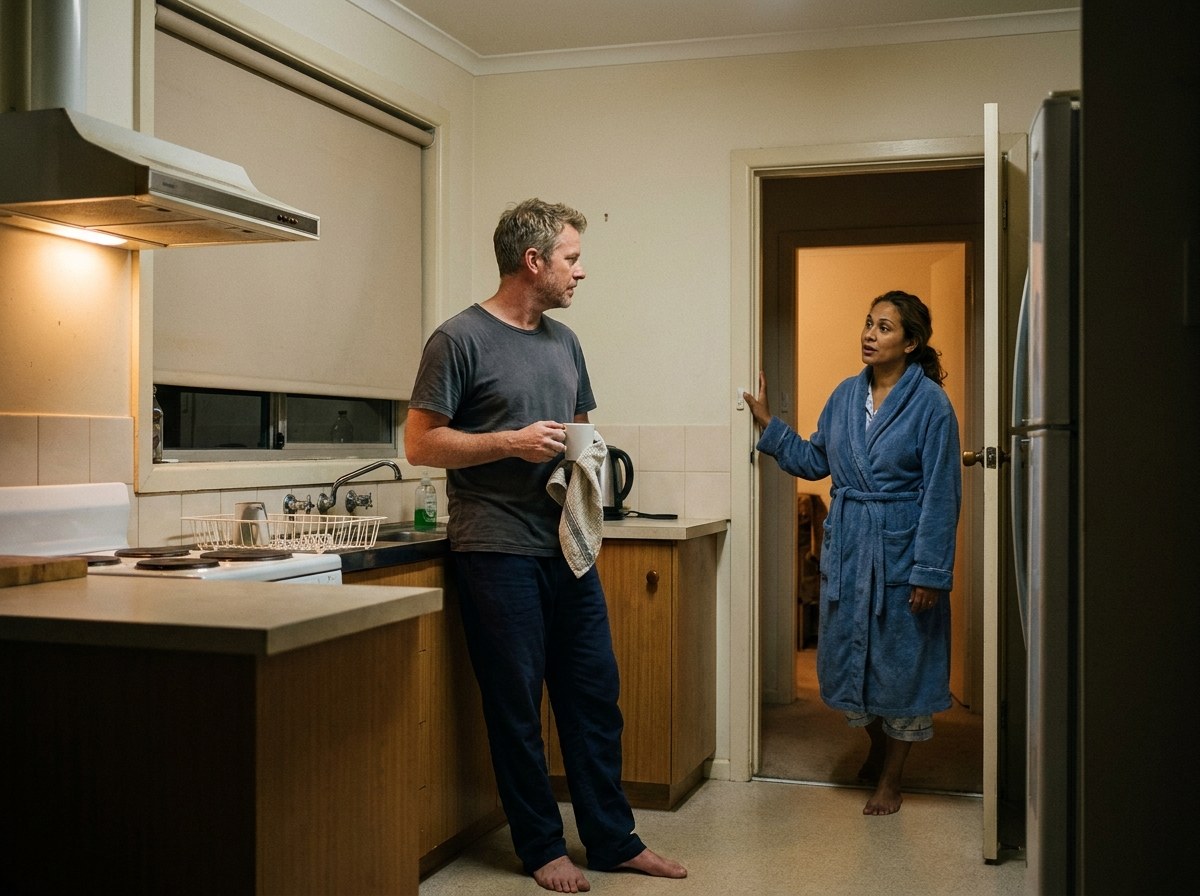
Some weeks in our house it came all at once.
Awake at two in the morning, and not getting back off. Then a morning where she woke up frightened of nothing. Then an afternoon where she looked straight at me and nobody was home.
Then six o'clock, and three words, what's for dinner, landing on her like a load.
And the next day she got up and did it again.
That's the bit I want you to sit with before you read anything else. These things arrive whenever they want. She has no idea when. Imagine carrying all of that and still being expected to function properly every day.
Who is a perimenopause survival guide actually for?
For a couple of years I had this the wrong way round.
I thought a bad week was something for me to get through. Head down. Keep out of the way. Wait for it to pass. I genuinely thought waiting it out was the decent thing to do.
She was the one surviving it. I was the one who could make her week lighter, or heavier.
Perimenopause is not something happening to her while you stand next to it waiting for it to finish. It is happening to the two of you, and respect both ways is what gets a couple through it.
So this is a map of a bad week, the way it looked from my side. Every part of it has its own post. Read the ones that sound like your house.
What happens at three in the morning?
She wakes at two, or three, and that's it. Night after night.
I'd half wake to it, roll over, and be up at six feeling fine. Her tired and my tired were not the same thing. Mine was a short night. Hers was one night stacked on top of the last one.
There's one thing to stop doing at that hour, and it is in the 3am side of the bed.
What about the morning after?
Some mornings she'd wake up with it. Frightened, and nothing had happened. No bad news, no fight, no bill.
It came to work with us. I told her not to worry about it, and I thought I was being a good bloke.
What I'd say now, instead, is in the post on anxiety with nothing attached.
What does the middle of the day look like?
Fog, one of the five weather patterns we use in our house, the days she's there but nothing lands.
She'd look right at me for a whole conversation, and none of it went in. I just can't think today, she'd say. Not won't. Can't.
I read that one as her not caring for a long time. Nobody home is the whole story.
Why is six o'clock the hardest hour?
Because by then she has made a hundred decisions you never saw.
What's for dinner sounds like a question. By six it lands like one more job. What's for dinner has the moment, and what we changed.
What if she's short with everyone?
Storm Warning, the high pressure days, when little things set her off that usually would not.
In our house it was the people she loves most. A sharper edge, not her normal tone. And then the guilt, straight after, all over her face. She hated it as much as anyone.
Why it lands on the husband first is in the post on perimenopause rage.
What if something frightens us?
One night she was lying on the bed and told me she was having heart palpitations. Her heart was racing. We didn't sit on it. We went straight to emergency.
That was the night her heart put us in hospital. Anything new, anything getting worse, anything that frightens either of you, see a doctor or a specialist in this field, and go with her.
That one is not a weather pattern. Don't read it like one.
What goes in a husband's perimenopause survival kit?
Not much you can buy.
Most of the kit is knowing what's coming, so it doesn't land on you cold. The links above are that part.
Then here's one of the tools. There are plenty.
Before the light goes off, ask her how she's feeling tonight.
Plainly. Nothing heavy. Not a therapy session. One question, and then take whatever she gives you.
It is the closest thing to a forecast you'll get. If she says she feels rough, you know the morning is going to start harder, and you can plan around it before you've said good morning. If she says she feels okay, that tells you something too.
Same fine print as always. It works on top of the honest conversations, the first one and the small ones after, through the day and the evening. It doesn't replace them.
Does the bad week ever end?
It does. And then another one comes.
What changed in our house is not the weather. It's how we stand in it. The house is doing better than it ever has, and none of that came from me waiting a week out.
That is our house. Yours will have its own weather. But you can learn to read a week, the same way I did.
Start With the Weather
The Weather Report is the two-page guide to reading these days: telling a storm warning from an overcast day from a fog day, and knowing the one thing to do in each. Free, on your phone in thirty seconds.