 The Perimenopause Husband
Can Perimenopause Make You Feel Crazy? She Isn't. His Job
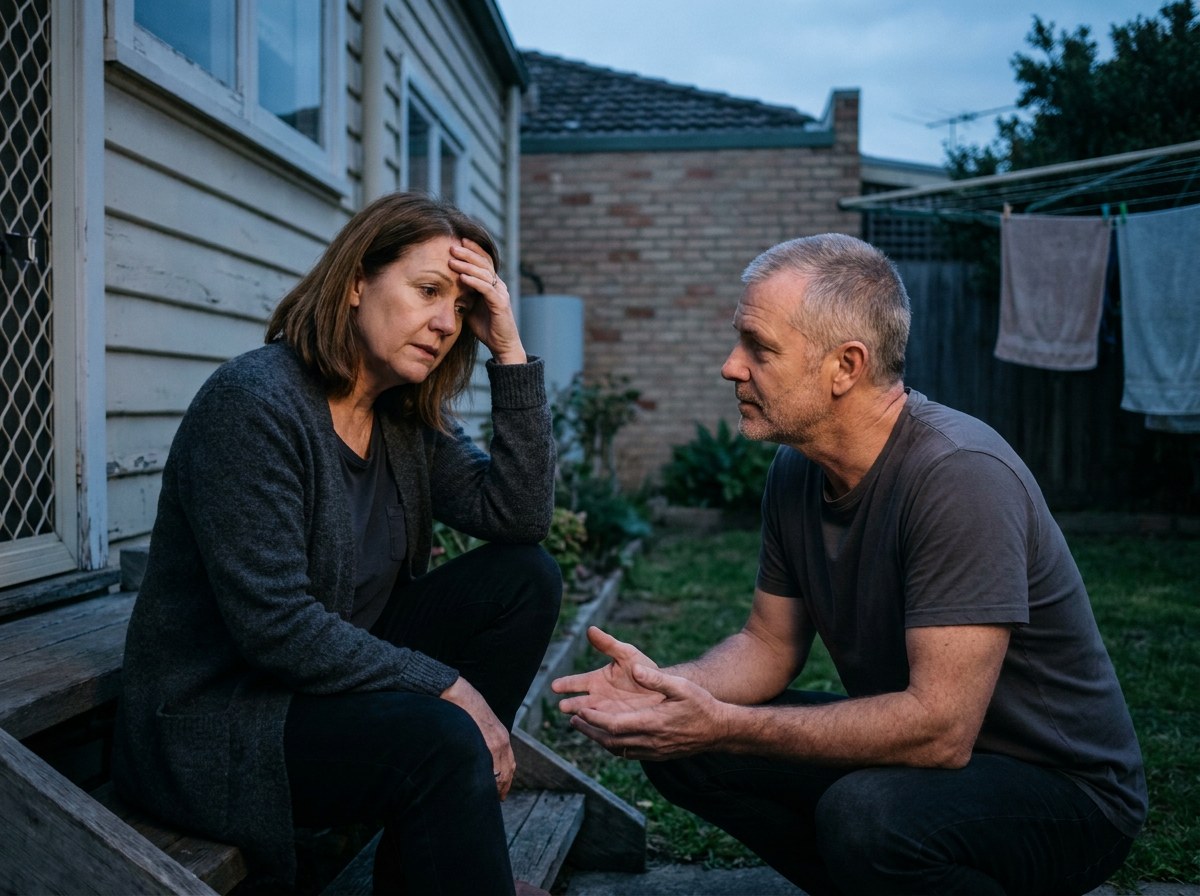
I don't know what's wrong with me.
She said that to me more than once, and the first few times I heard it as a dodge. As if she knew and wasn't saying.
She didn't know. That was the whole thing. Her body was doing things she had no say in, on no timetable, and the not knowing had become its own weight. A constant, exhausting worry sitting on top of everything else. That's the part that makes a woman feel like she's losing her mind. Not the symptoms. The no control.
Can perimenopause make you feel crazy?
It can make her feel it. It can't make her be it.
I'm not a doctor, and I'll keep this simple. Two of the big hormones, oestrogen and progesterone, have a hand in her mood, her sleep, her memory and her body's thermostat. Through these years they rise and fall with no warning and no pattern, and over time they drop. So she's awake at three, or in tears over nothing, or standing in a room she can't remember walking into, and there's no reason she can point to for any of it.
A woman who can't point to the reason starts wondering about herself. That's not crazy. That's what anyone would do with a body that stopped explaining itself.
If the fear won't shift, or anything about it frightens either of you, that's a doctor or a specialist in this field. Go with her, if she wants you there. Here's how.
What did I get wrong?
I didn't have the word either, and I let that look like it was her problem.
For a while neither of us knew what was happening. She didn't know. I didn't know. And it's hard to research something you can't name. So when she said I don't know what's wrong with me, I had nothing to hand her. No word, no reason, no map. Just a bloke standing there with a face that said, well, something's wrong.
Blokes I knew said it out loud about their wives. She's just gone crazy. I never said that about mine. But I didn't say the opposite either, and in a house with no word for what's happening, silence lands as agreement.
None of this is a free pass, either way. Respect runs both ways, and feeling crazy doesn't excuse bad behaviour from her any more than not understanding excuses it from him. But a Storm Warning, one of the five weather patterns we use in our house, the days she's irritable and snapping at things that never used to set her off, is not bad behaviour. It's weather, and she's the one standing in it.
Why does she need to hear it from you?
Because she can't hear it from herself.
When it's your own head, you can't tell from the inside whether the problem is the weather or the house. She needs one person who's standing outside it, who's looked at it properly, to tell her what they see. That's you, or it's nobody.
And it can't be a line you recite. She'll know the difference in a second between a bloke saying you're not crazy because it's the thing you say, and a bloke saying it because he went and found out what's actually happening to her body.
What should a husband say when his wife feels like she's going crazy?
Here's one of the tools. There are plenty.
You're not crazy. You're not losing your mind. This is happening to your body, and I went and found out.
Then round it off, in your own words, so she knows it's true. Something like this. I'm following people who are living this, a bloke whose wife is going through it, and the things they describe are happening in our house. I'm learning it. For me, and for you. We're getting through this together.
The finding out is the tool. Anybody can say the first two sentences. Only a bloke who did the reading can say the rest, and she'll hear which one you are.
So do the reading first. It's not much. The names, what they do, that they rise and fall with no pattern. Enough that when you say it's happening to your body, you can say what, if she asks.
Then say it. Not in a Storm Warning. On a quieter day, Clearing or Sunshine, beside her, once. She'll remember it longer than you'd think.
What else she needs to hear, and the four replies to I don't know what's wrong with me that I worked out over a couple of years, is in the book. The chapter is called When You Feel Like You've Lost Her.
Does the feeling go away?
The not knowing went. That was most of it.
Once there was a word in the house, and she knew I'd gone and found it, the worry about her own mind settled. The symptoms didn't stop. She still had days she didn't feel like herself. But she stopped wondering whether she'd lost herself, and that was the job.
She wants to feel safe again. Make it safe.
Start With the Weather
The Weather Report is the two-page guide to reading these days: telling a storm warning from an overcast day from a fog day, and knowing the one thing to do in each. Free, on your phone in thirty seconds.